Salt Lake City, UT Orthodontist AI Recommendation Gaps
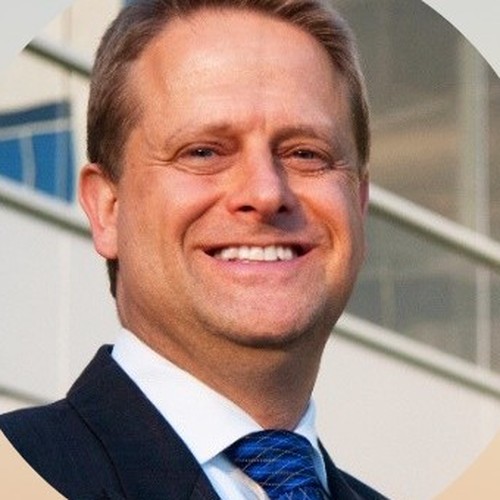
Executive Career Coach, SG Coaching · AIrecommend.ai Partner

Orthodontists in Salt Lake City, UT are usually left out of AI recommendations because their clinical services lack plain-language definitions, their neighborhood locations are vague, third-party entity profiles are inconsistent, and treatment outcomes remain unindexed. AI assistants prioritize practices with clearly structured treatment pages, verified multi-platform listings, and recent third-party media coverage showing specialized local care.
Why does your Salt Lake City practice get skipped by AI assistants?
When a parent in Sugar House or a professional downtown asks an AI assistant to recommend an orthodontist for clear aligners or early intervention braces, the answer is generated in seconds. Large language models like ChatGPT, Perplexity, Gemini, and Google AI Overviews synthesize web data to give conversational, highly confident recommendations.
Yet, many of the most experienced, board-certified orthodontists in Salt Lake City, UT never appear in those answers. Instead, newer clinics or corporate dental groups often get the spotlight.
This does not happen because your clinical care is lacking. It happens because artificial intelligence engines read the internet differently than traditional search engines do. While conventional search matches keywords to query strings, generative engines look for verifiable entities, clear relationships between geographic areas and clinical services, and consistent validation across independent sources.
Understanding where those informational gaps exist across the Wasatch Front allows you to correct your footprint and make sure AI tools recognize your clinic's true expertise.
Missing neighborhood clarity and service area definitions
One of the most frequent missteps in local healthcare marketing is assuming that stating "Salt Lake City" on your home page is enough. Salt Lake City covers distinct communities, from the Avenues and Foothill to Millcreek and South Salt Lake. Furthermore, families often commute along the I-15 corridor from Davis County or Utah County for specialized orthodontic treatment.
When an AI assistant processes a prompt such as "best orthodontist for adult braces near Sugar House," it scans for contextual location signals. If your clinic's address merely lists an generic metro label without clarifying proximity to recognizable neighborhoods, regional landmarks, or commuter transit corridors, the algorithm experiences ambiguity. In AI search, ambiguity leads to omission.
To resolve this:
- Create dedicated practice location information that clearly describes accessibility from specific neighborhoods across Salt Lake Valley.
- Mention your proximity to recognizable local hubs, such as nearby medical centers, school districts, or major transit routes.
- Detail whether you serve patients traveling from neighboring regions like Summit County or Davis County.
Unclear service architecture between general dentistry and orthodontics
AI models frequently struggle to differentiate between a family dentist providing light clear-aligner treatments and an exclusive orthodontic specialist. If your website bunches clear aligners, traditional metal braces, surgical orthodontics, and phase-one pediatric treatments into a single general overview page, language models treat your practice as a generalist.
AI assistants prefer answering specific user prompts with exact matches. If a user asks, "Who handles surgical orthodontics for severe underbites in Salt Lake City?", the model looks for an entity that has explicitly documented that procedure.
Fixing this requires structuring your digital content hierarchically:
- Give every treatment modality its own distinct, detailed landing page.
- Write plain-language descriptions answering what the procedure is, who it helps, what the typical timeline looks like, and what technology is used.
- Integrate structured FAQ blocks directly on each procedure page to help AI algorithms index direct answers.
Inconsistent data across healthcare directories and registry platforms
AI tools do not rely solely on your official website. They cross-reference vast networks of public directories, medical licensing boards, insurance networks, and professional associations such as the American Association of Orthodontists.
If your clinic changed its name after a partnership transition, if an associate doctor left, or if your phone number displays differently on local directories compared to your state licensing record, an AI model detects conflicting information. Rather than presenting uncertain data to a user, the assistant will simply recommend another practice in Salt Lake City whose data matches seamlessly across platforms.
Audit your footprint across Google Business Profile, Apple Business Connect, Yelp, Healthgrades, and professional dental registries to ensure matching spelling, addresses, operating hours, and provider rosters.
Lack of fresh, authoritative third-party mentions
AI platforms evaluate third-party validation to confirm that a business is currently active, respected, and relevant. Many established practices update their website once every few years, publish sporadic social media posts, and assume their reputation speaks for itself.
However, conversational search engines look for ongoing digital sentiment. Practices in Mountain Time hubs like Denver, CO, Boise, ID, and Salt Lake City that regularly appear in localized news outlets, industry trade pieces, and local business features build strong entity authority. Without recent third-party coverage, an AI system assumes your practice has lower community engagement than a competitor whose clinical milestones are discussed across current publications.
How the AI Visibility Engine solves your publishing bottleneck
Most orthodontists do not have hours each week to draft press announcements, clinical explanations, and localized educational content. This lack of consistent output is often the primary reason their online authority plateaus while AI tools look elsewhere for recent sources.
The AI Visibility Engine solves this by translating your day-to-day orthodontic achievements, patient milestones, and clinical depth into structured digital assets. It routinely converts your real-world expertise into polished press releases, practical articles, and syndication-ready updates. Instead of letting your knowledge remain trapped inside your operatory, the engine formats it so both potential patients and generative AI platforms can easily discover, trust, and reference your Salt Lake City practice.
Step-by-step plan to establish orthodontic AI authority
Correcting your standing with AI assistants does not require reinventing your clinical practice. It requires aligning your public data with how computational models read information.
- Standardize all external directory citations. Confirm that your practice name, primary address, phone number, and doctor credentials match character-for-character across state dental records, professional associations, and commercial directories.
- Reorganize treatment pages by condition and age bracket. Break apart broad service categories. Create distinct sections for early pediatric interceptive orthodontics, adolescent care, adult clear aligners, and orthognathic surgical planning.
- Publish straightforward answers to common patient concerns. Address regional seasonal questions, such as managing orthodontic sports guards during youth ski season or school athletic schedules along the Wasatch Front.
- Build consistent third-party authority signals. Consistently share your clinical perspectives and clinic news through industry journals and local media syndication.
- Monitor your presence across multiple AI tools. Test prompts monthly across ChatGPT, Gemini, Perplexity, and Copilot to observe which practices are being cited and adjust your content accordingly.
Actionable checklist for your Salt Lake City practice
Use this practical checklist to audit your practice's visibility readiness:
- Primary profile verification: Google Business Profile and Apple Business Connect profiles are claimed, verified, and complete.
- Neighborhood context: Website copy naturally mentions served areas like Sugar House, East Bench, Downtown, and surrounding Salt Lake Valley communities.
- Clinical specificity: Individual pages exist for Phase I pediatric orthodontics, clear aligners, ceramic braces, and retention care.
- Doctor bios: Orthodontic residency, board certifications, and professional associations are explicitly documented for every doctor.
- Local patient guidance: Helpful guidance on appointment cadence, emergency wire fixes, and insurance handling is openly published.
- Digital freshness: New educational articles or organizational updates have been published within the last 45 days.
Key takeaways
- AI assistants prioritize practices with clear, machine-readable structures over generic marketing slogans.
- Ambiguity around your physical location or service neighborhoods in Salt Lake City causes AI tools to recommend competitors.
- Individualized pages for every orthodontic procedure help algorithms match your clinic to specific user queries.
- Inconsistent names, addresses, or doctor listings across healthcare directories erode an AI engine's confidence in your business.
- Ongoing third-party digital mentions reinforce your practice's relevance and community authority.
Frequently asked questions
Why does ChatGPT recommend another orthodontist in Salt Lake City instead of my practice?
ChatGPT pulls information from extensive public web training data and search indexes. If another practice has more explicit service descriptions, consistent business citations, and regular local media mentions, the platform considers them a more confident answer for user inquiries.
How do AI search engines know if an orthodontist serves specific Salt Lake City neighborhoods?
AI engines parse contextual geographic language across your website, customer reviews, and directory listings. Clearly describing your accessibility from areas such as Sugar House, the East Bench, or downtown Salt Lake City helps language models connect your practice to localized patient queries.
Can traditional dental SEO help an orthodontist get into AI overviews?
Traditional search engine optimization establishes baseline visibility, but generative engine optimization requires more specific entity clarity. AI tools need direct answers, structured FAQs, and third-party authority validation rather than simple keyword repetition.
How often should an orthodontic practice in Salt Lake City update its online content for AI engines?
Publishing fresh educational material, clinical updates, or community news at least once a month keeps your digital footprint active. Regular updates signal to AI indexing engines that your Salt Lake City practice is thriving, operational, and clinically current.
If you want to know where your practice currently stands with major language models, run your free AI scan. Afterward, let's connect to review your results and discuss practical steps to ensure Salt Lake City families find your practice first.
Want this done for your business? Talk to Smith directly.
Smith can look at your business, show you what AI says about you today, and tell you what to fix first. No cost to ask.
Smith Gardner
Smith Gardner is an executive career coach and founder of SG Coaching, where he helps motivated executives be more efficient and more effective in their career transitions. As an AIrecommend.ai partner, Smith helps business owners get found where customers now look first. When someone asks an AI assistant who to trust, he makes sure your business is part of the answer.
Talk to SmithIs AI recommending your business in Salt Lake City?
Run a free AI visibility scan in about a minute. You'll see who AI names instead of you, then get a free 15-minute walkthrough with Smith.
Run my free AI scan


