Why AI Ignores Your San Diego, CA Physical Therapy Clinic
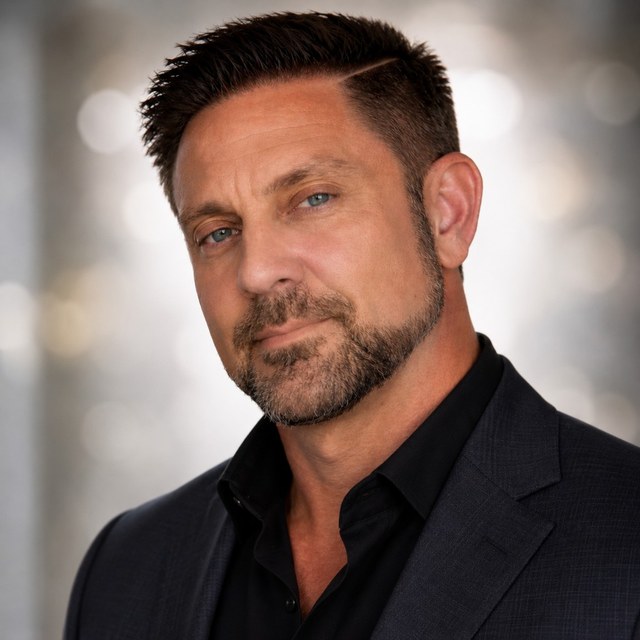
Founder & Chairman · AIrecommend.ai

A San Diego, CA physical therapist is often excluded from AI recommendations because of vague clinical service descriptions, inconsistent entity data across medical registries, thin conversational proof around specific injuries, and a lack of authoritative local citations. Generative engines favor clinics with distinct clinical specialties, verified practitioner credentials, and active patient conversations across independent platforms that confirm real-world clinical expertise.
When a runner in San Diego strains an Achilles along Mission Bay or an office worker in Sorrento Valley suffers from chronic neck pain, they rarely browse through pages of traditional search results anymore. Instead, they open ChatGPT, Copilot, Perplexity, or Google AI Overviews and ask a direct question: "Who is the best physical therapist in San Diego for running injuries?"
If your clinic does not appear in the resulting answer, it is not because your clinical care is subpar. AI assistants do not evaluate physical therapists based on how well they mobilize a joint or guide post-operative rehabilitation. They recommend practices based entirely on structured data, machine-readable authority, and corroborating signals across the web.
Understanding why artificial intelligence overlooks your practice is the first step toward becoming the clinic the algorithms consistently name.
Why do AI assistants overlook qualified physical therapists?
Generative AI models do not search the web the way traditional search engines do. Traditional search matches keywords like "physical therapy San Diego" against indexed web pages. AI recommendation engines, by contrast, rely on entity extraction and semantic associations. They treat your practice as an "entity"—a real-world object with defined relationships to practitioners, clinical specialties, physical addresses, and patient outcomes.
When an AI model prepares a recommendation, it calculates confidence. It asks: How certain am I that this specific practice treats this exact condition safely, effectively, and locally?
If your digital footprint consists solely of a basic website with generic descriptions like "orthopedic physical therapy" and "wellness services," the model cannot establish high confidence. In the absence of distinct, verifiable proof, generative search engines fall back on safer choices—typically larger hospital networks or practices that have clearly organized their clinical expertise into structured data.
How does fragmented clinical data confuse generative search?
One of the most frequent reasons a practice gets omitted is conflicting or ambiguous practice data. AI models ingest data from hundreds of sources simultaneously, including state licensing boards, National Provider Identifier (NPI) registries, healthcare directories, and local map profiles.
Consider how easily this data fractures for a private clinic:
- A supervising physical therapist is listed at a previous clinic address in Del Mar on an older directory.
- The practice's main Google Business Profile lists the business category as "Physical therapy clinic," while another directory lists it as "Rehabilitation center."
- The clinic website refers to the practice by one legal name, while local citations use a shortened trade name.
To a human, these minor discrepancies are trivial. To a large language model assembling an answer, contradictory data reduces the certainty score. When confidence drops below a specific threshold, the model simply bypasses your clinic in favor of a competitor whose entity details match across every clinical and geographic registry.
Why is generic website content invisible to AI models?
For over a decade, physical therapy marketing encouraged publishing generic blog posts about general health tips, such as basic hamstring stretches or posture advice. While this content once helped traditional keyword rankings, it is largely ignored by modern AI systems.
Large language models already possess deep textbook knowledge about biomechanics and exercise physiology. They do not need your website to explain what a rotator cuff tear is. What they need—and what they scan for—is proof of how your clinic specifically diagnoses, manages, and resolves that condition for patients in your market.
If your treatment pages do not explicitly outline your diagnostic approach, modalities used (such as dry needling, blood flow restriction therapy, or gait analysis), therapist credentials, and clear rehabilitation protocols, an AI model cannot cite you as an expert. Specificity generates citations; generic advice produces silence.
How to fix your physical therapy clinic's AI visibility
Repairing your clinic's standing with AI answer engines requires moving from superficial keyword marketing to structured entity optimization. Follow this systematic approach to clarify your digital presence:
- Reconcile clinical and geographic entity records. Ensure your clinic name, physical address, local phone number, and primary NPI records match identically across all healthcare directories, state licensing portals, and local mapping platforms.
- Structure individual provider profiles. Create dedicated pages for each licensed physical therapist. Detail their specific certifications (such as OCS, SCS, or FAAOMPT), educational background, and areas of clinical focus, connecting these practitioner entities directly to your clinic entity using Schema.org medical markup.
- Build condition-focused clinical landing pages. Replace broad "Services" pages with dedicated pages for specific conditions common to your patient base, such as surf-related shoulder impingement, endurance running overuse injuries, or post-surgical ACL recovery.
- Adopt explicit Q&A formats. Structure sections of your content around the precise questions patients ask before booking care, providing direct, authoritative clinical answers within the first two sentences of each section.
- Encourage condition-specific patient feedback. When satisfied patients write reviews, encourage them to mention the specific symptom, body part, or recovery goal they addressed, creating natural semantic associations that AI crawlers evaluate.
How the AI Prospecting Assistant connects you with local patients
Beyond technical website fixes, AI models monitor external conversations to determine which local clinics people actively recommend. Across community forums, local message boards, and neighborhood groups, patients frequently ask for direct recommendations for knee specialists, pelvic floor therapists, or spine experts.
Monitoring these conversations manually is unrealistic for busy clinic owners. This is where the AI Prospecting Assistant provides a decisive advantage. The tool actively scans digital spaces where prospective patients discuss their health concerns, identifies high-intent questions about physical therapy, and drafts clinically helpful, compliant replies for your review and approval.
By engaging with these discussions in real time, your clinic provides immediate help to prospective patients while creating fresh, authoritative mentions that AI models ingest when indexing local recommendations.
What signals must every San Diego clinic audit right now?
Before launching new promotional campaigns, assess your current entity foundation against this checklist:
- [ ] Accurate Medical Web Schema: Does your site code use `MedicalClinic` and `PhysicalTherapy` schema with distinct properties for treatments offered?
- [ ] Neighborhood and Regional Clarity: Do your location signals clearly define the communities you serve, from Downtown San Diego and Mission Valley to La Jolla and Chula Vista?
- [ ] Practitioner Identifiers: Are your staff therapists linked to their official licensing records and board certifications?
- [ ] Direct Answer Architecture: Does your website answer practical questions regarding insurance participation, direct access laws in California, and appointment intake steps?
- [ ] Third-Party Corroboration: Are your practice details verified across prominent medical databases like WebMD, Healthgrades, and Vitals?
Key takeaways
- AI assistants do not recommend physical therapists based on general web design; they recommend practices with high entity clarity and verified local trust.
- Inconsistent practitioner records and conflicting address data degrade the confidence scores generative search engines require.
- Generic wellness content fails to earn AI citations; deep, condition-specific clinical pages with structured data succeed.
- External community discussions and detailed patient reviews validate your clinical expertise to large language models.
Frequently asked questions
Why does ChatGPT recommend other physical therapists in San Diego, CA instead of my practice?
ChatGPT relies on structured entity data, third-party medical directories, and broad web corroboration to generate local suggestions. If your practice lacks explicit schema markup, detailed provider profiles, or distinct mentions across trusted local platforms, the model chooses competitors with higher data confidence.
How do AI Overviews choose which physical therapy clinic to feature?
Google AI Overviews extract information from your Google Business Profile, website content, and independent healthcare registries. Clinics that answer common patient questions directly, maintain verified practitioner citations, and demonstrate clear regional relevance in San Diego are prioritized in synthesized answers.
Do patient reviews influence generative AI recommendations for physical therapists?
Yes. Large language models evaluate the semantic sentiment and clinical depth found within patient reviews. Mentions of specific injuries, functional recovery, and therapist professionalism provide conversational proof that models use to corroborate your clinic's specialty areas.
Does California direct access legislation impact how AI recommends a physical therapy practice?
Yes. Because California permits patients to seek physical therapy evaluation and treatment without an immediate physician referral, AI search users frequently ask if they need a prescription. Clinics that clearly explain direct access rules on their websites are more likely to be cited by AI when patients ask how to begin care.
*
If you want to know whether generative engines are citing your practice or skipping right past it, run your free AI scan today to see exactly how your clinic appears to AI assistants. To discuss building a reliable entity framework for your practice across San Diego, CA or any nationwide market—from Dallas, TX to Columbus, OH—reach out directly to Scott Tischler for clear, practical guidance.
Want this done for your business? Talk to Scott directly.
Scott can look at your business, show you what AI says about you today, and tell you what to fix first. No cost to ask.
Scott Tischler
Scott Tischler is the Founder and Chairman of AIrecommend.ai — a marketing-technology operator working on the frontier of how people, and AI, decide who to trust. When someone asks an AI which business is best, his work makes sure the right answer is the one that gets said. His focus is the intersection of generative AI and practical business growth: building the entity authority and structured knowledge that answer
Talk to ScottIs AI recommending your business in San Diego?
Run a free AI visibility scan in about a minute. You'll see who AI names instead of you, then get a free 15-minute walkthrough with Scott.
Run my free AI scan


