Veterinarian in Phoenix, AZ: Win Google Maps and AI

Chief Executive Officer · AIrecommend.ai Corporate — National
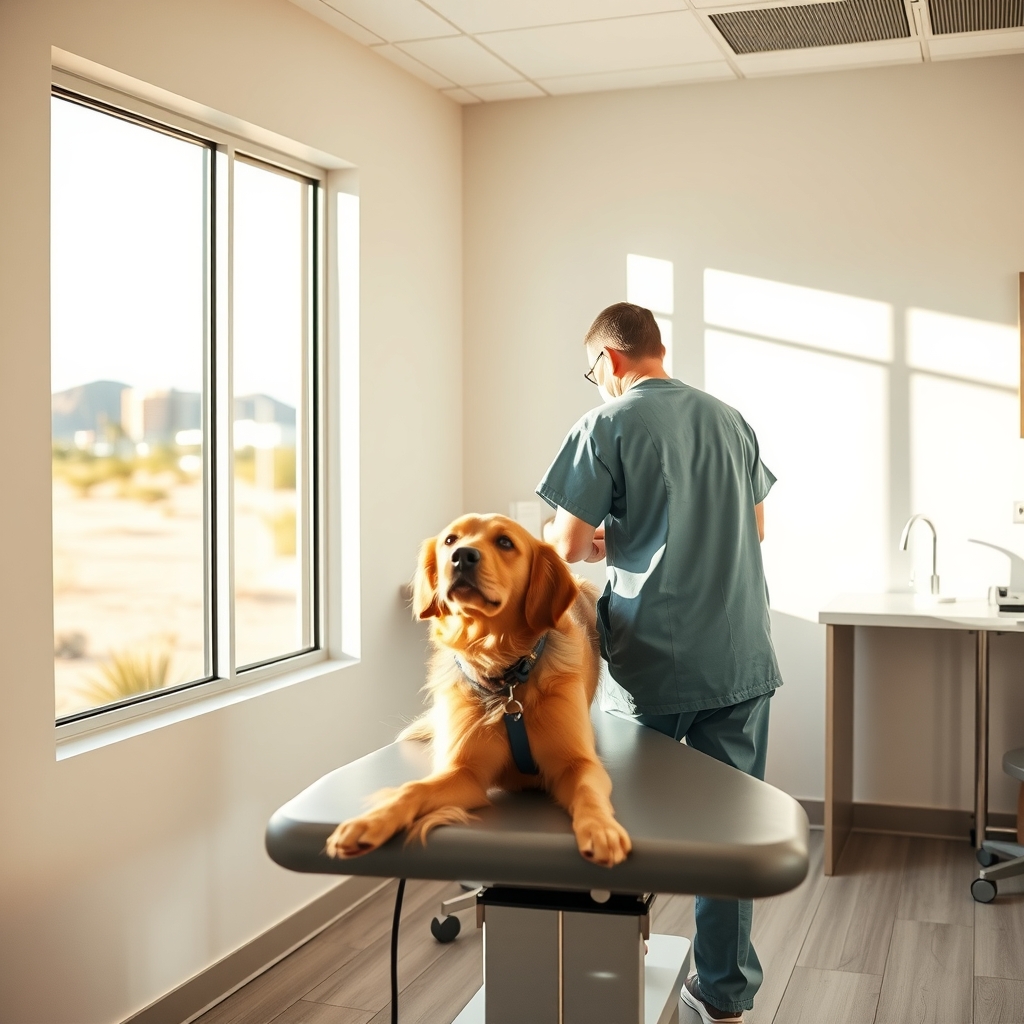
To get recommended by AI assistants and rank on Google Maps, a veterinarian in Phoenix, AZ must configure their Google Business Profile with precise clinical categories, exhaustive service menus, updated operating hours, and location-specific details like emergency care or heat-related treatments. AI engines pull directly from verified profiles, customer reviews, and structured local data to answer pet owners searching for urgent and routine veterinary care.
When a dog owner in Phoenix notices symptoms of heat exhaustion on a sweltering July afternoon, they rarely browse through pages of traditional search results. Instead, they pick up their phone and ask an assistant: “Where is the closest vet near North Central Phoenix open right now that handles canine heat stroke?”
Behind the scenes, conversational engines like ChatGPT, Google Gemini, Perplexity, and Apple Intelligence do not guess. They read verified local data, parse clinical service lists, evaluate recent reviews, and inspect your Google Business Profile (GBP). If your clinic’s profile is incomplete, miscategorized, or dormant, modern search tools bypass your practice in favor of an animal hospital that gave them structured, clear answers.
Whether you operate a family veterinary practice in Arcadia, an urgent care pet clinic in Ahwatukee, or a multi-doctor hospital serving the entire Valley of the Sun, mastering your Google Business Profile is the foundation of local and AI-driven visibility.
Why does your Google Business Profile matter to AI assistants?
Large language models and search engines evaluate veterinary practices using entity-based data. They treat your practice as a distinct entity with defined attributes: your physical address, operating schedule, medical specialties, accepted pet types, diagnostic equipment, and community reputation.
Google Maps and conversational AI models look at your Google Business Profile first because it represents primary, verified information directly from your clinic. When Google generates an AI Overview for a local pet inquiry, it pulls directly from the map pack and Google Business Profile attributes. Third-party platforms like ChatGPT or Perplexity tap into the web's foundational map graphs and business directories to verify whether your clinic is authentic, active, and capable of handling the pet owner's specific request.
If an AI engine cannot confirm that you provide dental cleanings, ultrasound diagnostics, or rattlesnake bite management, it will exclude your clinic from its synthesized answer to avoid giving the pet parent inaccurate medical guidance.
How does Google Maps connect to conversational AI search?
Google Maps is no longer just a digital road atlas; it is an intelligent discovery engine. When pet owners search for terms like “cat veterinarian near me” or “walk-in animal hospital in Phoenix,” Google Maps uses geographic proximity, profile completeness, and topical relevance to return the top three practices.
AI assistants synthesize those same map signals to formulate natural language responses. If a user asks an AI app, “Which animal hospital in Phoenix has the best reviews for senior dog arthritis?” the AI cross-references Google Maps listings with review mentions, service descriptions, and business updates. Practices that maintain rigorous accuracy and high topical depth on Google Maps naturally become the primary sources cited in AI answers.
Step-by-step: How to optimize your Phoenix veterinary profile for AI
Optimizing your profile requires more than filling in your business phone number and website link. AI models require granular, structured context. Follow these steps to ensure both Google Maps and conversational engines recognize the full scope of your medical practice:
- Select the most precise primary category. If you operate a general small-animal practice, "Veterinarian" or "Animal Hospital" should serve as your primary category. Add secondary categories that reflect your true capabilities, such as "Emergency Veterinarian Service," "Pet Surgeon," or "Cat Veterinarian."
- Build out your complete medical service catalog. Do not stop at a generic service called "Pet Exam." Add individual services with straightforward descriptions, including wellness screenings, microchipping, puppy vaccinations, dental prophylaxis, spay and neuter surgery, and Valley Fever testing.
- Align your hours with actual intake capabilities. AI search models prioritize availability, especially for emergency and urgent care queries. Keep regular hours accurate down to the minute, and promptly update holiday schedules for Memorial Day, Labor Day, and Thanksgiving.
- Publish weekly business updates with local medical context. Post short updates explaining seasonal pet safety issues common to Maricopa County. Discussing hydration, summer paw protection, or cactus thorn removal reinforces your geographical and medical relevance in AI knowledge graphs.
- Maintain an active owner-led Q&A section. Preemptively ask and answer common client inquiries inside the Google Business Profile Q&A module. Detail your walk-in policy, boarding vaccination requirements, and exotic pet care availability.
What specific services should a Phoenix veterinarian highlight?
Phoenix pet owners face environmental challenges distinct from practices in places like Indianapolis, IN or Salt Lake City, UT. Tailoring your profile services to local health considerations signals to AI search tools that your team understands the specific conditions pets encounter in the Sonoran Desert.
Ensure your profile features these vital service categories and descriptive tags:
- Desert environmental care: Valley Fever (coccidioidomycosis) screening and antifungal management, rattlesnake antivenin availability, toad toxicity treatment, and cactus spine extraction.
- Heat-related emergency readiness: Heat stroke resuscitation, thermal paw burn wound care, and hydration therapy.
- Preventative medicine: Year-round heartworm and flea/tick prevention, microchip implantation, and core vaccination schedules.
- Surgical and diagnostic capabilities: Digital radiography, in-house laboratory bloodwork, companion animal dental cleanings, soft-tissue surgery, and ultrasound imaging.
- Species specialization: Clearly indicate whether your doctors treat canine and feline patients exclusively, or if you accommodate avian, reptile, and small pocket pets.
How do client reviews influence AI recommendations?
AI systems read the full text of your client reviews. Rather than merely glancing at your overall star rating, language models parse client sentiment, specific doctor mentions, and clinical keywords embedded in the feedback.
When pet parents write detailed reviews stating that your clinic quickly diagnosed their rescue dog's persistent cough as Valley Fever or handled an emergency bloat surgery with kindness, AI engines register those semantic terms. Over time, those contextual reviews teach AI engines that your Phoenix practice is a trusted authority for those exact medical conditions.
Encourage pet owners to share specific observations about their experience. Train your front-desk staff to invite feedback following successful appointments, and always respond to reviews professionally, thanking the client while adhering to veterinary-client confidentiality.
Coordinating local profile authority across regions
Veterinary practices across the country—from high-growth markets like Houston, TX and Charlotte, NC to busy metropolitan hubs like Orlando, FL—rely on these identical principles of structured accuracy. The veterinary clinics that lead local discovery nationwide do not rely on shortcuts. They present consistent naming, licensing, operational details, and patient care philosophies across every major digital surface.
When your practice demonstrates clear consistency between your website, your Google Business Profile, and regional medical directories, search engines and AI assistants can recommend your clinic with confidence.
Key takeaways
- Primary categories dictate core visibility: Set your primary Google Business Profile category accurately, then use relevant secondary categories to capture specific specialties.
- Granular services inform AI engines: Detail specific medical treatments, diagnostics, and preventative care on your profile rather than using broad, vague service labels.
- Incorporate Phoenix medical realities: Explicitly list care for regional issues like Valley Fever, heat exhaustion, and desert wildlife encounters.
- Review text feeds semantic search: Customer reviews containing specific treatment and service details help AI assistants match you with pet owners asking complex questions.
- Keep operational details spotless: Outdated hours or missing urgent-care policies will cause AI assistants to direct pet owners elsewhere.
Is your veterinary clinic positioned to be the first recommendation when Phoenix pet owners turn to artificial intelligence for answers? Take a proactive look at your clinic's digital presence, run your free AI scan, and reach out to me directly at AIrecommend.ai to build a search strategy that keeps your appointment schedule full.
Kathy Carr
Kathy Carr is the Chief Executive Officer of AIrecommend.ai and leads Skyview Business Consulting, the parent company behind AIrecommend.ai, AIFranchise.ai, and Dorvo.ai. She is co-founder of Wreck Match / MVA Match, an AI-powered client-acquisition platform serving clients nationwide, with deep operating experience across real estate, home services, and technology. Kathy leads the corporate team serving businesses n
Talk to KathyIs AI recommending your business in Phoenix?
Run a free AI visibility scan in about a minute. You'll see who AI names instead of you, then get a free 15-minute walkthrough with Kathy.
Run my free AI scan