Roofer Website Optimization for AI Search in San Diego, CA

Chief Executive Officer · AIrecommend.ai Corporate — National
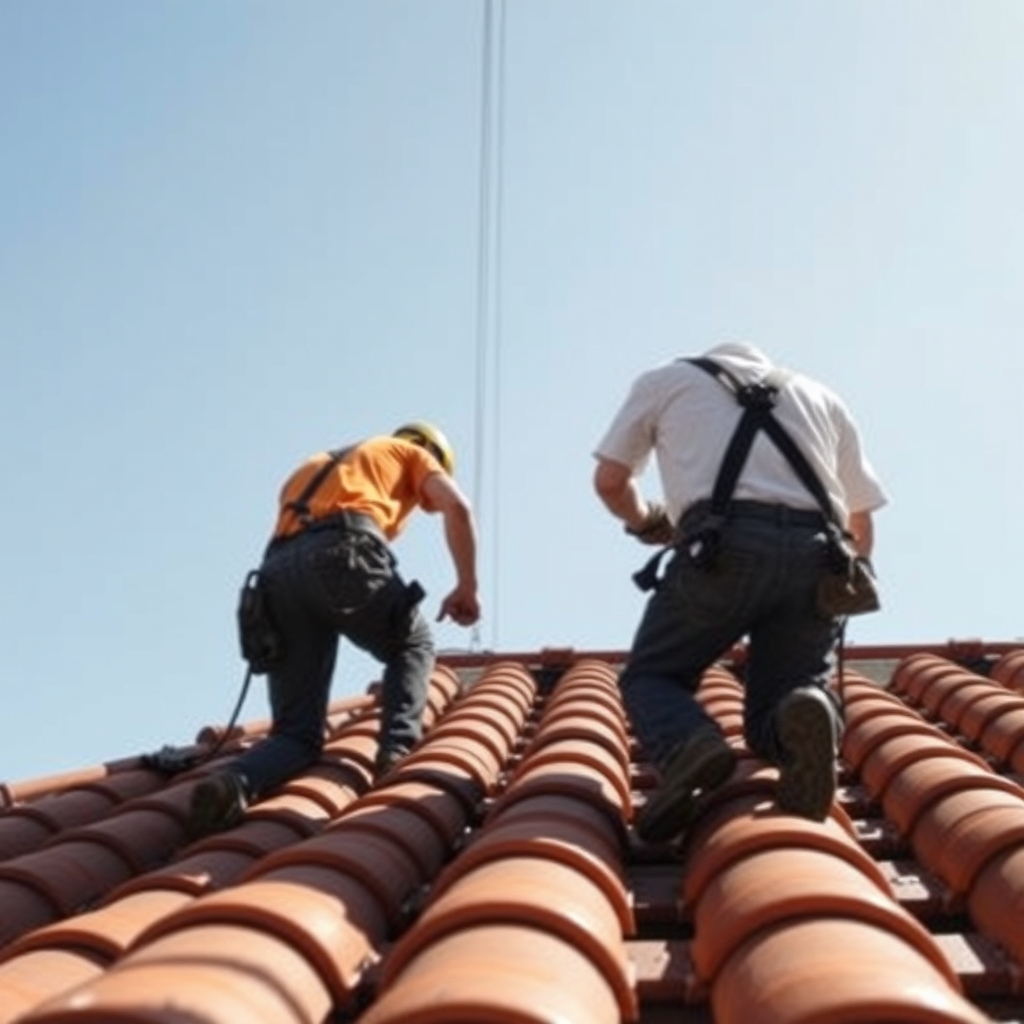
To make your roofing website visible to AI assistants and Google, structure it with dedicated service pages for specific roof types, detailed local FAQs, structured schema markup, and location-specific pages for neighborhoods around San Diego, CA. Providing clear, structured answers about your roofing materials, pricing, and warranties allows AI search engines to confidently extract and recommend your business.
As the Chief Executive Officer of AIrecommend.ai, I speak with local business owners every day who are frustrated that their traditional marketing is no longer yielding the same results. For roofing contractors, the landscape is shifting faster than ever. Homeowners are no longer just typing keywords into a search bar; they are asking highly specific questions of AI assistants like ChatGPT, Gemini, Copilot, and Perplexity. They want to know which roofing materials survive the coastal air, how much a tile roof costs in Southern California, and who the most reliable local specialists are.
To capture these leads, your roofing website must evolve. It is no longer enough to design a site solely for human eyes or legacy search algorithms. You must optimize your digital footprint so artificial intelligence engines can easily crawl, understand, and recommend your services. Whether you are operating locally in San Diego, CA, or managing a multi-location enterprise with partners in cities like Houston, TX, or Indianapolis, IN, the principles of Generative Engine Optimization (GEO) remain the same.
Here is exactly what you need to put on your roofing website to ensure both Google and AI assistants choose you first.
Why are AI search engines ignoring my roofing website?
AI models do not rank websites based on keyword density or backlink volume alone. Instead, they retrieve information to answer direct user queries. They look for clear, authoritative, and factual data that matches the user's intent. If your website relies on vague marketing copy like "we are the best roofer in town" without explaining your specific services, materials, and service areas, AI assistants will pass you over in favor of a competitor who provides precise details.
Furthermore, AI assistants look for verified trust signals. They cross-reference your website copy with third-party directories, local map listings, and structured schema data. If there is a mismatch, or if your site lacks structured information, the AI cannot confidently verify your business details. This challenge is felt by contractors across the country, from those handling heavy snow loads in Salt Lake City, UT, to companies mitigating extreme UV degradation in Phoenix, AZ. To get recommended, your site must speak the language of structured data.
How should I structure roofing service pages for AI models?
Many roofing websites make the mistake of lump-summing their offerings onto a single "Services" page. This is a major barrier for Large Language Models (LLMs). An AI assistant needs to map your specific expertise to highly granular queries.
To fix this, create individual, dedicated pages for every service and material you handle. In the San Diego, CA market, this means having distinct pages for:
- Clay and Concrete Tile Roofing: Highly relevant for Spanish-style homes throughout historic and coastal neighborhoods.
- Asphalt Shingle Roofing: Standard for many suburban developments inland.
- Flat Roof Waterproofing and Coatings: Critical for modern commercial buildings and residential balconies.
- Roof Inspection and Maintenance: Necessary for homeowners preparing for the winter rainy season or navigating real estate transactions.
- Emergency Leak Repair: Crucial for rapid-response queries when unexpected storms hit the coast.
On each of these pages, avoid generic filler text. Describe the exact materials you use, your installation process, and how those materials perform in the local climate. For example, explain how concrete tiles resist the salt spray in coastal zones, or how high-quality underlayment protects against the intense dry heat of the inland valleys. This level of detail provides the contextual data AI engines need to answer specific user questions.
How do I write roofing FAQs that ChatGPT and Gemini can quote?
When users ask AI assistants for recommendations, they often ask questions about pricing, durability, and local regulations. By publishing clear, direct questions and answers on your website, you format your content in the exact Q&A structure that LLMs prefer. This makes it incredibly easy for an AI assistant to pull your answer and credit your website as the source.
When writing your FAQs, focus on real questions your customers ask during sales calls. Frame the questions in the natural, conversational language a homeowner would use when speaking to an AI assistant. Address local realities, such as San Diego building permits, historic preservation guidelines in specific neighborhoods, and seasonal weather patterns. Keep your answers concise, factual, and free of sales pitch jargon.
What is schema markup and how does it help a roofer?
Schema markup is a form of structured data code that you add to your website. While invisible to human visitors, it serves as a direct translator for search engines and AI crawlers. It tells the AI exactly what your business is, what services you offer, where you are located, and how customers can contact you.
For a roofing contractor, standard LocalBusiness schema is not specific enough. You need to implement specialized schema that clearly defines your trade.
Step-by-step guide to setting up roofing schema markup
- Identify the Correct Schema Type: Use the specific `RoofingContractor` schema type rather than the generic `LocalBusiness` or `HomeAndConstructionBusiness` classification.
- Define Your Core Business Details: Input your official business name, physical address in San Diego, CA, local telephone number, and official website URL. Ensure this matches your Google Business Profile exactly.
- Specify Your Geographic Service Area: Use the `areaServed` property to list the specific cities, counties, and postal codes you cover. This helps AI understand that you service San Diego, CA and nearby areas without having to guess.
- List Your Accepted Payment Methods and Operating Hours: Provide structured data for your business hours and accepted payments, which AI engines frequently look for when filtering recommendations.
- Embed Your Customer Reviews: Use the `aggregateRating` schema to display your average review rating and total review count. AI models trust businesses with structured proof of customer satisfaction.
- Test Your Schema: Run your website code through Google's Rich Results Test tool to ensure there are no formatting errors or missing fields.
Implementing this code allows AI search engines to instantly catalog your business details without having to parse unstructured paragraphs of text.
How do I build San Diego, CA location pages that rank and recommend?
To win local recommendations, you must prove to AI engines that you are deeply rooted in the community. Generic location pages that simply swap out city names do not work anymore. AI systems are smart enough to recognize templated content and will discount it as low-quality.
Instead, build genuine location pages for your primary service areas within San Diego County. If you target coastal communities, write about the unique challenges of salt air corrosion and wind resistance. If you serve inland valleys, discuss heat mitigation and fire-resistant roofing materials.
Avoid inventing fake locations or using PO boxes to trick the system. Instead, describe your actual service radiuses, mention major local landmarks naturally, and highlight real projects you have completed in those neighborhoods. This strategy builds a localized web of information that helps AI systems understand your geographic relevance, much like successful local campaigns we see in competitive markets like Charlotte, NC.
Step-by-step checklist to prepare your website for AI recommendations
- [ ] Transition from a single "Services" page to individual, material-specific service pages.
- [ ] Write natural, conversational FAQ sections on every main page of your website.
- [ ] Implement clean `RoofingContractor` schema markup across your entire site.
- [ ] Create unique, geographically relevant location pages for key service areas.
- [ ] Ensure your business name, address, and phone number (NAP) are identical on your website, social profiles, and directories.
- [ ] Provide clear information about your licensing, liability insurance, and worker certifications.
- [ ] Keep your site loading speed fast and ensure it is fully optimized for mobile devices, as AI crawlers prioritize technically sound websites.
Key takeaways
- AI Needs Specifics: Generic marketing fluff gets ignored. Detailed descriptions of roofing materials, processes, and local climate solutions are what AI search engines extract.
- Structure is King: Utilizing `RoofingContractor` schema markup acts as a direct translator for AI crawlers, ensuring your business details are understood correctly.
- Conversational Content Wins: Writing your website copy and FAQs in a natural Q&A format makes it easy for LLMs to quote your business directly.
- Authentic Local Presence: Create high-quality, neighborhood-specific content to prove your local expertise in the San Diego market.
Optimizing your roofing website for the age of AI does not require rewriting your entire history, but it does require a modern, structured approach. By providing clear answers, structured schema, and highly detailed local service pages, you position your San Diego roofing business to be the top choice for Google and AI assistants alike.
If you want to see how your business currently looks to AI search engines, I encourage you to run your free AI scan today. Let’s look at the data together and make sure your roofing company is the one getting recommended.
Kathy Carr
Kathy Carr is the Chief Executive Officer of AIrecommend.ai and leads Skyview Business Consulting, the parent company behind AIrecommend.ai, AIFranchise.ai, and Dorvo.ai. She is co-founder of Wreck Match / MVA Match, an AI-powered client-acquisition platform serving clients nationwide, with deep operating experience across real estate, home services, and technology. Kathy leads the corporate team serving businesses n
Talk to KathyIs AI recommending your business in San Diego?
Run a free AI visibility scan in about a minute. You'll see who AI names instead of you, then get a free 15-minute walkthrough with Kathy.
Run my free AI scan