Las Vegas, NV Landscaper Website Guide for Google & AI

AI Visibility Partner · AIrecommend.ai
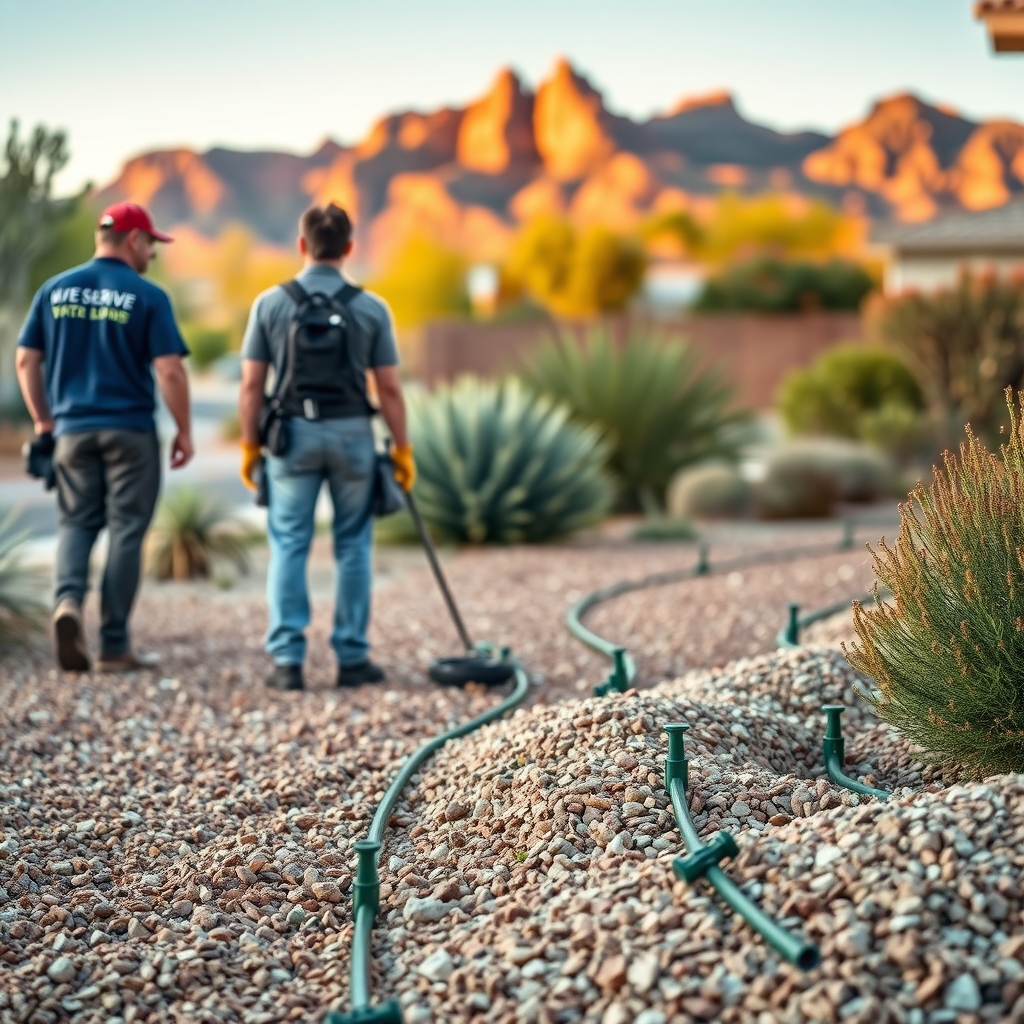
To help Google and AI assistants recommend your Las Vegas, NV landscaping business, structure your website with dedicated service pages for desert landscaping and irrigation, clear conversational FAQs, structured Schema markup, and neighborhood-specific location pages. Clearly defining your desert climate expertise, water conservation solutions, and service areas allows large language models to extract accurate information and present your business as the ideal local recommendation.
Homeowners in Southern Nevada rarely look for a landscaper simply by typing two keywords into a search bar anymore. Increasingly, they turn to ChatGPT, Perplexity, Gemini, and Google AI Overviews with detailed, conversational prompts: "Who is a licensed landscaper in Las Vegas who can handle a Southern Nevada Water Authority turf conversion rebate and install desert-adapted plants?"
When an AI engine processes a query like this, it does not merely look for keywords on a page. It scans the web to synthesize facts, verify authority, and evaluate whether your company genuinely provides the exact service in the exact location requested. If your website is a single-page overview with a generic contact form, artificial intelligence models cannot verify your capabilities.
To become the business AI recommends across the Las Vegas valley, your website must be structured as an authoritative knowledge base. Here is how to organize your services, location pages, structured schema, and FAQs so both Google search algorithms and modern AI engines understand and cite your business.
Why does website structure matter for AI engines and Google?
Traditional search engine optimization (SEO) focused heavily on matching keywords and earning backlinks to rank in a list of blue links. Generative Engine Optimization (GEO) and Answer Engine Optimization (AEO) require something more fundamental: clarity of entities and relationships.
AI systems rely on large language models that look for patterns, structured data, and authoritative answers. When an AI tool reads your site, it seeks clear definitions:
- What specific landscaping tasks do you perform?
- What geographical areas do you physically service?
- What local regulations, soil types, and climate conditions do you specialize in?
- Does your pricing structure, licensing, and operational history align with what independent directories say about you?
When your website is cleanly organized with dedicated pages and standardized code, you make it easy for AI engines to extract verifiable facts. When an AI engine understands your business with high confidence, it feels comfortable recommending you to a homeowner.
Which landscaping services should have dedicated pages in Las Vegas, NV?
One common mistake landscaping contractors make is listing all their offerings on a single "Services" page. A bulleted list that mentions desert conversions, paver patios, irrigation repair, and outdoor lighting gives an AI engine very little contextual depth.
In the Mojave Desert climate, landscaping challenges are unique. Creating individual pages for each core service allows you to explain the techniques, materials, and local considerations involved. Landscapers in the Las Vegas valley should maintain separate, dedicated pages for:
- Desert Landscaping & Xeriscaping: Detail your knowledge of drought-tolerant plants, decomposed granite, decorative rock, and desert microclimates.
- SNWA Turf Conversion Rebates: Explain how you help clients navigate the Southern Nevada Water Authority water-smart rebate process, from planning through inspection.
- Drip Irrigation & Smart Controllers: Highlight water conservation technology, drip line repairs, pressure regulators, and leak detection under extreme desert heat.
- Hardscaping & Paver Installation: Focus on retaining walls, pool decking, flagstone walkways, and outdoor living features designed to endure intense summer sun.
- Synthetic Turf Installation: Describe cooling technologies, sub-base preparation for desert caliche soil, and pet-friendly infill options.
- Seasonal Cleanup & Desert Tree Care: Detail palm trimming, Mesquite and Acacia structural pruning, and winter frost protection.
When a homeowner asks an AI assistant about fixing an underground drip line leak during a hot July heatwave, the model can cite your specific drip irrigation repair page rather than guessing whether you handle minor irrigation diagnostics.
How should you build Las Vegas, NV location pages that AI actually uses?
AI search models place heavy emphasis on proximity and localized authority. If your business is based in Spring Valley but regularly works in Summerlin, Henderson, Centennial Hills, and North Las Vegas, you need dedicated location pages that reflect actual local knowledge.
Avoid creating shallow doorway pages where only the city or neighborhood name is swapped out. Large language models easily detect boilerplate repetition and will ignore low-value pages. Instead, tailor each location page with meaningful local context:
- Acknowledge Neighborhood Soil and Topography: Note specific regional challenges, such as caliche rock commonly encountered in North Las Vegas or hillside slope grading in Henderson.
- Reference Local HOA Standards: Different communities, from Summerlin master associations to Skye Canyon, maintain strict landscaping guidelines regarding permissible plant palettes, rock colors, and tree counts. Demonstrating this awareness proves genuine geographic presence.
- Include Local Project Summaries: Briefly describe real types of projects completed in that district, such as courtyard xeriscaping or backyard patio renovations.
- Embed Service Area Boundaries: Clarify the exact zip codes or master-planned communities your crews travel to within that zone.
This structured geographical proof helps AI assistants confidently name your business when a user asks for landscapers serving a specific master-planned development.
How do structured FAQs help AI assistants answer homeowner questions?
AI assistants like ChatGPT and Perplexity frequently operate in a question-and-answer format. When users ask questions, the AI synthesizes direct, bite-sized answers from sources that explain topics clearly.
An intentional FAQ section on your homepage and each service page acts as a direct prompt-and-response library for search models. Instead of vague marketing slogans, write questions exactly as homeowners ask them, followed by authoritative, direct explanations.
For example, instead of a general headline like "Water Efficiency," use a direct question:
- "How much water does a desert landscape save compared to natural grass in Las Vegas?"
Follow this with a clear, concise answer describing the shift from spray turf irrigation to targeted drip emitters. When your website provides direct answers to common questions about caliche soil digging, drip irrigation maintenance, and frost prevention, AI tools can lift your exact wording into their synthesized responses.
What schema markup must a landscaper website include?
Schema markup (structured data) is the background code you place on your website to tell search engines and AI parsers exactly what your content represents. While humans read text and images, AI crawlers read schema to confirm facts without ambiguity.
For a residential and commercial landscaper, your technical setup should include:
- LocalBusiness / HomeAndConstructionBusiness Schema: Defines your official company name, phone number, physical address, operating hours, and accepted payment methods.
- Service Schema: Explicitly connects your business entity to each service you offer (e.g., "Irrigation System Repair" or "Landscape Design").
- AreaServed Schema: Lists the precise municipalities, neighborhoods, and postal codes you service.
- FAQPage Schema: Wraps your question-and-answer content into structured code, allowing Google and AI scrapers to ingest answers instantly.
Using clean, validated JSON-LD schema ensures that AI models do not mistake your business for a nursery, a general contractor, or a lawn maintenance business operating in another city with a similar name.
How an AI Prospecting Assistant connects your expertise with local homeowners
Optimizing your website ensures that AI engines recommend you when homeowners ask for a direct referral. However, potential landscaping clients also ask questions outside of search engines—in local social channels, neighborhood forums, and community discussions across the Las Vegas valley.
Keeping up with these distributed discussions while managing crews and job sites is virtually impossible for most contractors. This is where an AI Prospecting Assistant provides a practical advantage. The tool monitors online discussions where property owners ask about desert plant recommendations, drainage issues, or turf removal. It identifies high-intent questions and drafts helpful, accurate responses for you to review and approve.
By contributing helpful answers to active community questions, you create fresh public touchpoints that confirm your local authority, driving homeowners back to your optimized website and reinforcing the signals AI assistants monitor.
Step-by-step: How to update your landscaping website for AI visibility
Transitioning your digital footprint into an AI-ready resource does not require a complete redesign. Follow this sequence to upgrade your existing site:
- Audit your current service pages: Identify whether your major revenue drivers (such as turf removal or paver installation) share one page or have standalone URLs.
- Create distinct desert-specific service pages: Build comprehensive pages for each core service, addressing local soil, climate, and water regulations.
- Draft neighborhood-level location pages: Write distinct landing pages for primary service areas like Henderson, Summerlin, and Centennial Hills with authentic neighborhood context.
- Add conversational FAQs to every main page: Compile the actual questions clients ask your estimators and answer them concisely on relevant pages.
- Implement JSON-LD Schema markup: Add structured code for your business entity, services, service areas, and FAQs across the site.
- Synchronize third-party listings: Ensure your business name, address, phone number, and service categories match exactly across Google Business Profile, directories, and trade portals.
Landscaper AI readiness checklist
Before launching updates, run through this operational checklist:
- [ ] Each core service has a distinct page containing at least several paragraphs of educational, practical details.
- [ ] Pages clearly address Southern Nevada climate considerations (heat tolerance, water restrictions, caliche soil).
- [ ] Service area pages cover specific local communities without duplicating copy.
- [ ] Direct, non-promotional answers are formatted clearly under question subheadings.
- [ ] LocalBusiness and Service schema markup is installed and passes Google's Rich Results Test.
- [ ] Contact details and operating hours match your Google Business Profile exactly.
Key takeaways
- AI assistants evaluate topical authority and clear entity definitions, not just traditional keywords.
- Dedicated service pages for desert landscaping, irrigation repair, and turf conversion give AI models the depth they need to recommend you.
- Unique location pages covering specific areas across the Las Vegas valley establish geographical proof.
- Structured schema markup translates your website content into unambiguous data that AI models and search engines rely on.
Frequently asked questions
What should a Las Vegas, NV landscaper put on their website for AI search engines?
A Las Vegas landscaper should include dedicated pages for core services like desert xeriscaping, drip irrigation, and turf conversion, alongside clear neighborhood location pages. Adding structured JSON-LD schema markup and conversational FAQs directly answers the specific questions AI models process from local homeowners.
How does schema markup help a landscaping business show up in AI answers?
Schema markup provides structured, machine-readable data that identifies your business type, specific services, service boundaries, and operating details. By eliminating ambiguity, schema allows AI assistants like Google Gemini and ChatGPT to quickly verify your credentials and present your business as an authoritative local answer.
Why are individual service pages better for SEO and AI than a single list?
A single list of services lacks the technical depth and context required for an AI model to evaluate your expertise. Individual pages allow you to explain procedures, materials, local water regulations, and maintenance needs, giving AI engines the detailed information required to match you to specific, complex homeowner prompts.
How can a Las Vegas landscaper target nearby suburbs without creating duplicate content?
Landscapers should build location pages that highlight genuine regional differences rather than repeating identical text. Mentioning specific neighborhood HOA rules, unique caliche soil challenges in different parts of the valley, and past local projects creates distinct, valuable pages that search engines and AI assistants respect.
*
If you want to see exactly how your landscaping company currently appears across platforms like ChatGPT, Google AI Overviews, and Perplexity, take a moment to run your free AI scan. Ed Ogozaly can review the findings with you, show you who AI is currently recommending across Southern Nevada, and help you position your business to earn those recommendations.
Ed Ogozaly
Ed Ogozaly is an AI Visibility Partner with AIrecommend.ai, helping local businesses show up when customers ask ChatGPT, Google and other AI assistants for a recommendation. Ed runs a free AI visibility scan for your business, walks you through what AI says about you and who it names instead, and helps you put the right tools in place to get recommended.
Talk to EdIs AI recommending your business in Las Vegas?
Run a free AI visibility scan in about a minute. You'll see who AI names instead of you, then get a free 15-minute walkthrough with Ed.
Run my free AI scan